Start from the symptom
JennAir dishwasher not drying.
Wet dishes with a JennAir usually come down to rinse aid, the dry option picked, loading and water temperature. Condensation on the tub walls is normal. To test the heater, run Sanitize and watch whether the light holds steady.
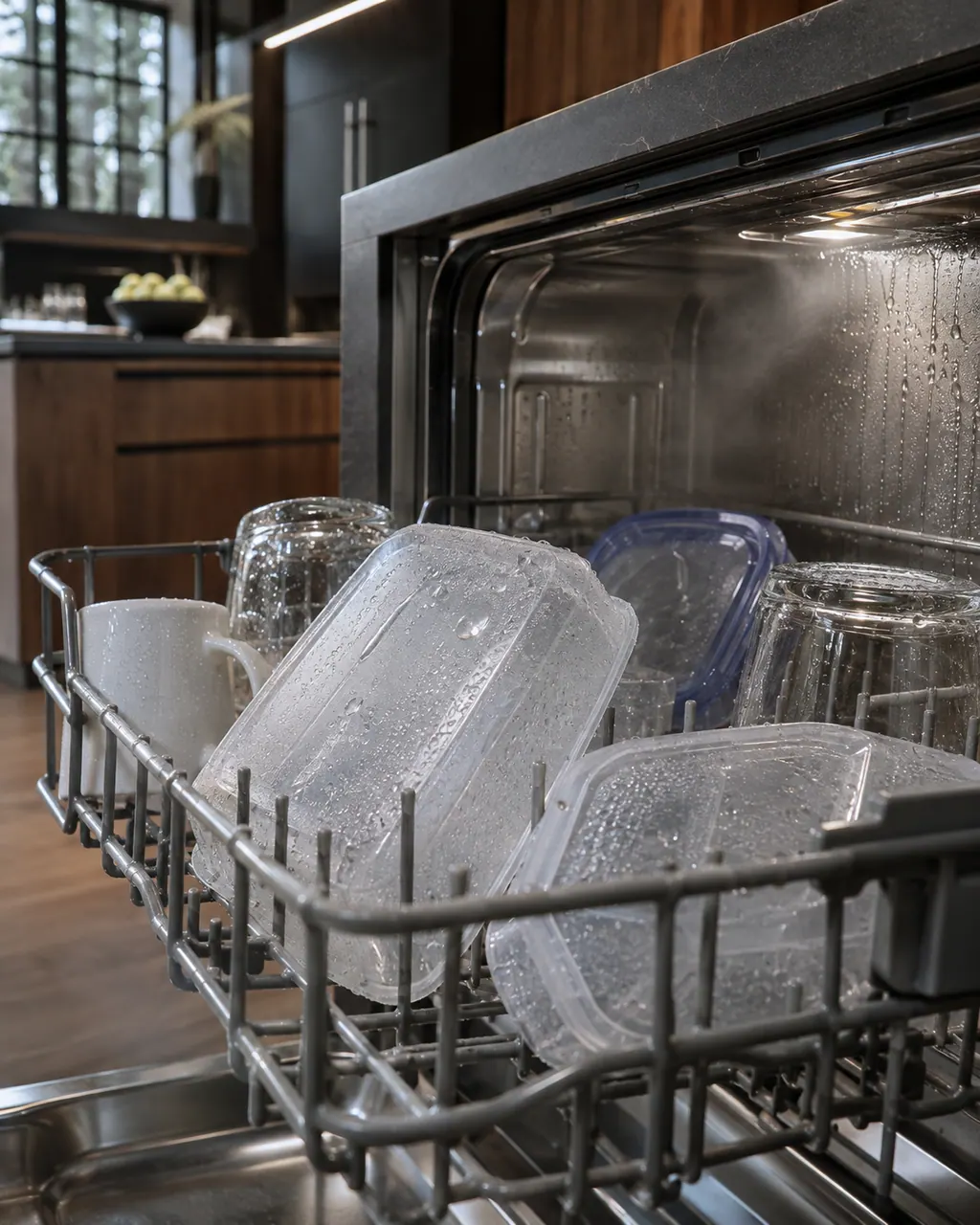
Start with safe observations.
Turn the appliance off and unplug it before any check you can do yourself. Look out for pooled water and sharp edges. Never touch a wet plug or live area, take off service panels, or go past your model’s owner instructions.
- 1
Fill and set rinse aid
JennAir says the dishwasher is built to use it and the heat dry works poorly without it. Raise the setting one level at a time if spots remain.
- 2
Pick a heated dry
Choose Heat or ProDry, or Extended Dry for big loads. Eco and Quick cycles cut heat.
- 3
Use Door Open Dry
On models that have it, the door opens a few inches after washing to vent humid air.
- 4
Load for runoff
Angle bowls and mugs, put plastics high in the upper racks and avoid nesting.
- 5
Check water temperature
JennAir wants hot water supplied at 120 F minimum.
- 6
Test the heater
Run Sanitize. A steady Sanitize light means no heater problem. A blinking light means service is needed.
Systems a technician may investigate.
The symptom connects to these parts. What you observed cannot show that any single one has failed.
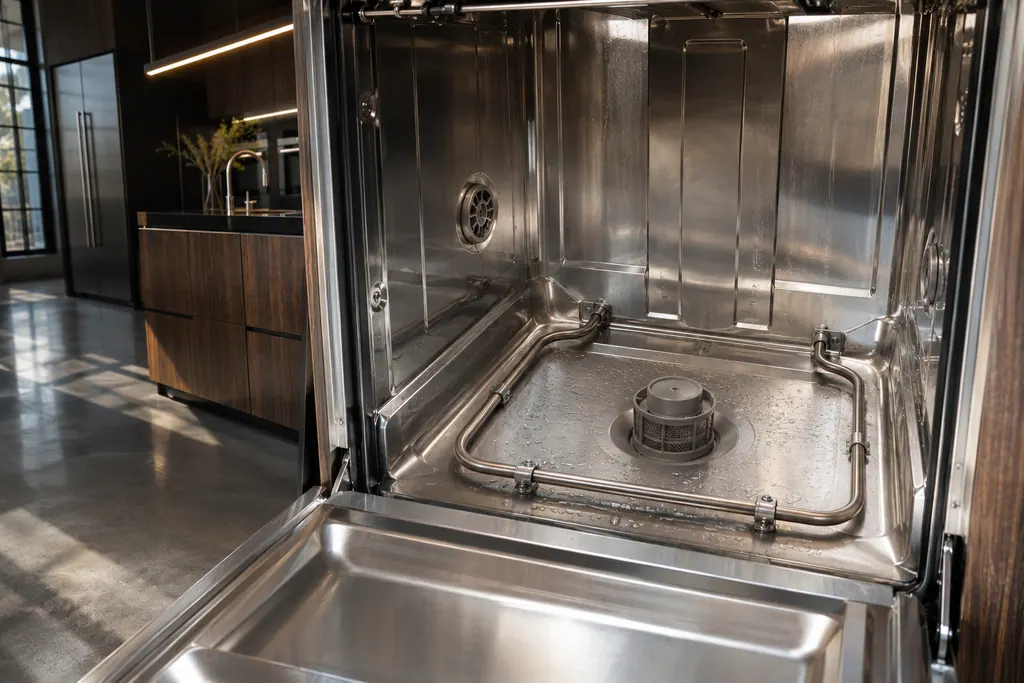
If the display adds a code.
No code tied directly to this topic.
No further researched dishwasher code is attached to this topic. Compare your exact message with your model manual and do not stand in a different code from the library.
See the research statusRead the related care guide.
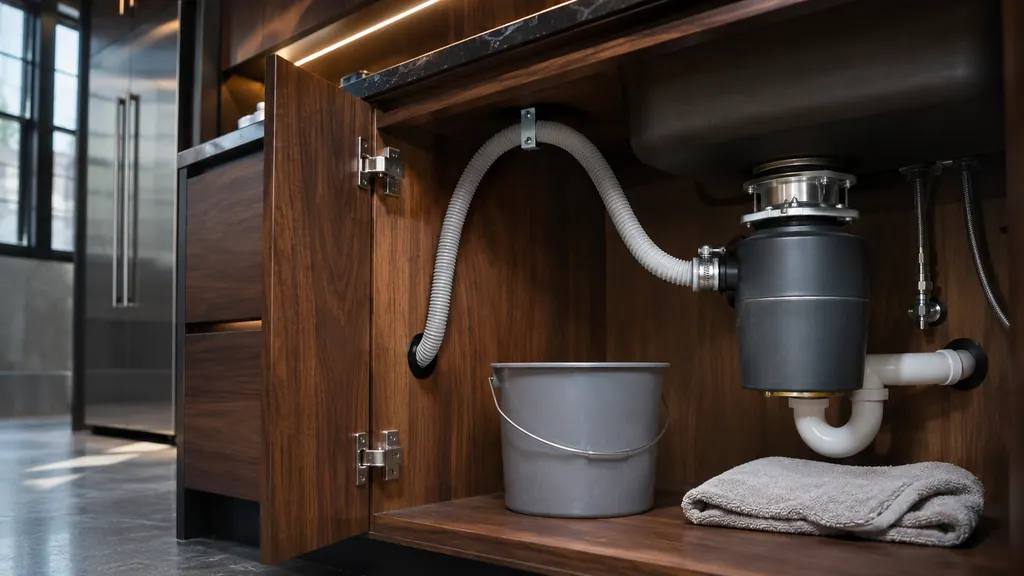
New dishwasher full of water? Check the install.
A newly installed JennAir dishwasher that will not drain usually has a setup problem: the disposer knockout plug is still in, the hose is kinked, or the drain loop or air gap is missing. Check those before you suspect the pump. Power the dishwasher off before you touch the hose. [1][2]
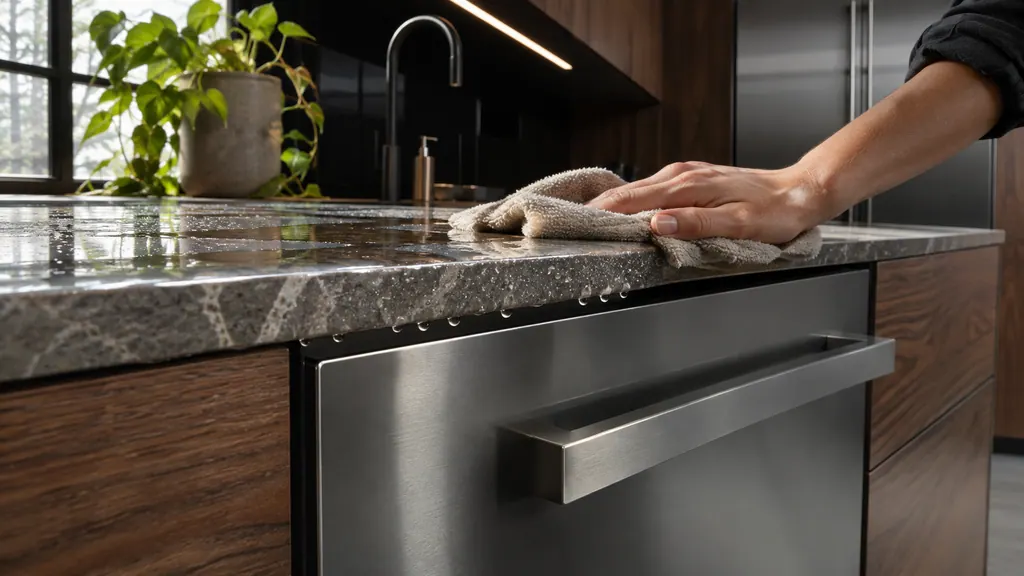
Drips under the counter? Steam or a leak.
Moisture on the underside of the counter near a JennAir dishwasher is usually condensation: steam from the vent meeting a cooler surface. A leak looks different, with water at the door edge, on the floor or under the unit. Check where the water shows up, and when. [1][2]
When observation becomes a service request.
Leave internal testing to a technician.
The Sanitize light blinks after a Sanitize cycle with 120 F water at the tap. Book a visit.
Arrange a diagnosticSources and model boundaries.
The JennAir dishwasher not drying guidance rests on these references. Pick the manual that fits your model.
- Dishes Not Drying: Quick Fix Guide - Product Help | JennAir
- Getting the Best Drying Performance - Product Help | JennAir
- Not Drying - Dishwasher - Product Help | JennAir
- Silverware is not Drying - Dishwasher - Product Help | JennAir
- Condensation on Interior - Dishwasher - Product Help | JennAir
- "Door Open Dry" - Door Not Opening - Dishwasher - Product Help | JennAir
- Frequently Asked Questions About Using Rinse Aid - Product Help | JennAir
- How to Determine Rinse Aid Level - Product Help | JennAir
Go by the instructions for your own model. See how we research these pages.
Is condensation inside the dishwasher normal?
Yes. JennAir says humid air condenses on the cooler tub walls as part of normal drying, and rinse aid helps.
Why are plastics still wet?
Plastic does not hold heat like glass, and complex shapes trap water. JennAir says to angle them and towel dry if needed.
How do I test the heating element?
Run a Sanitize cycle. Steady Sanitize light means the heater reached temperature; blinking means schedule service.
Does rinse aid really matter?
JennAir says yes: without it the interior stays wet and heat dry performs worse.
Code or symptom, part, service call
Tie the message to what comes next.
JennAir dishwasher won't start or fill
JennAir's order is power, then the door and lower rack, then water supply, control lock, delay start, and a one-minute reset. A dishwasher that will not fill adds the drain loop height and an interrupted-cycle flash to the list.
Dishwasher heating system
JennAir F4E2 names the heating system and F4E3 a heating error. Each page gives a power cycle and says to schedule service if the code comes back. A heating code can show up as dishes that are wet or not sanitized, so note the cycle you were running.
Dishwasher repair
Schedule a diagnostic for your model, carried out at the appliance.
Find your metro
Office details, plus the access notes to pass along.