On this page
- Steam meeting a cool countertop is a common cause of droplets. 1
- A rinse aid, a drying option and the exhaust fan all lower moisture. 1
- Door vent vapor can leave a small water spot when the door opens. 3
- Check the seal, the level and any items stuck in the door. 23
- Water under or behind the unit points to connections or suds. 25
Why is there water on the counter above my JennAir dishwasher?#
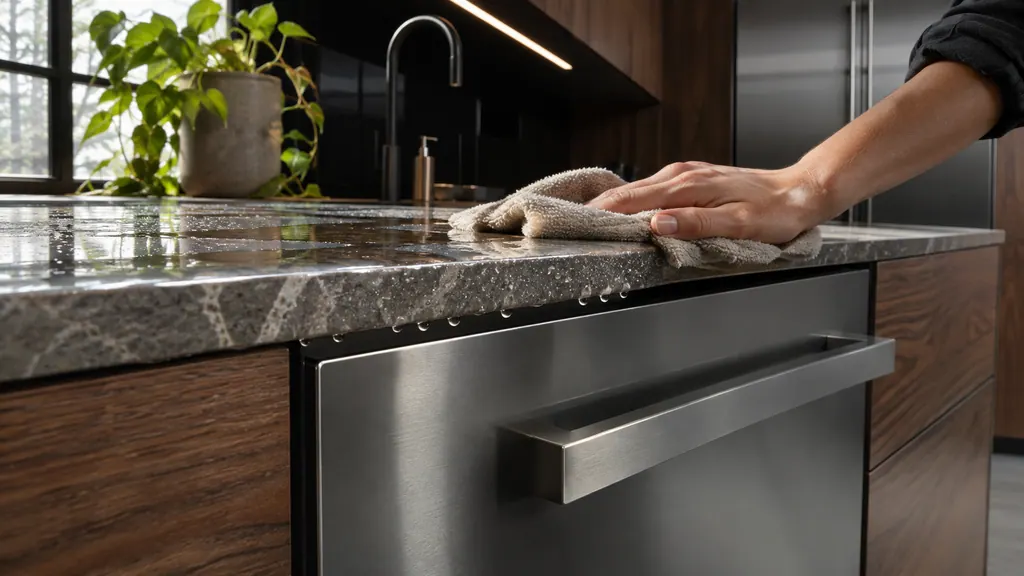
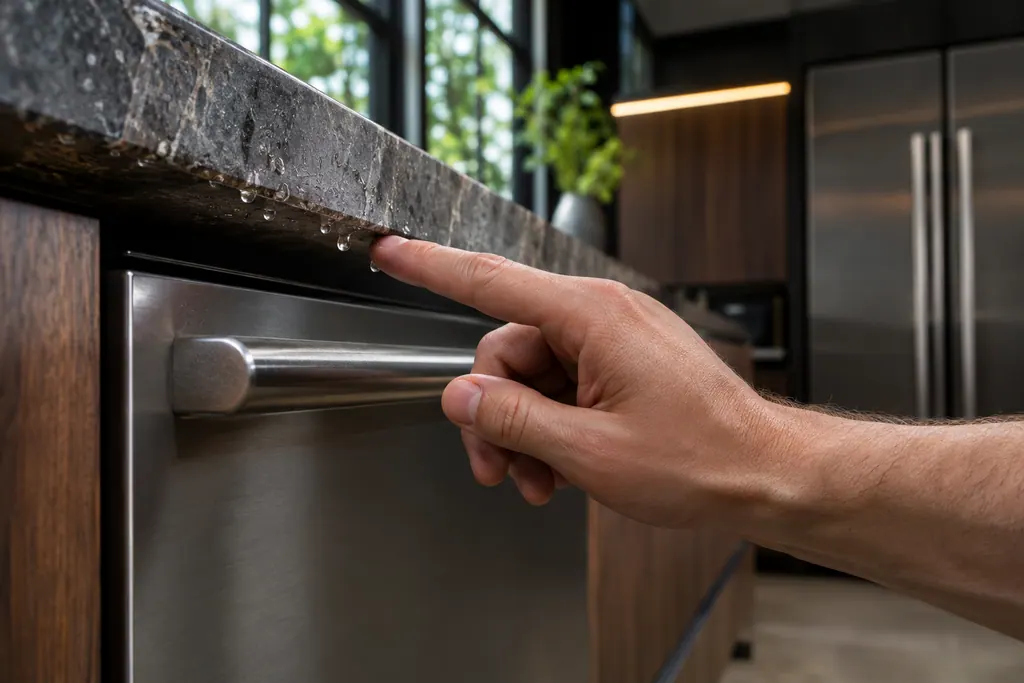
Most often it is steam. During or after a wash, warm, humid air leaves the dishwasher, meets a cooler countertop or cabinet underside and turns into visible droplets. JennAir says this is more noticeable after high-temperature cycles or in kitchens cooled by air conditioning. 1
Damp air near the dishwasher differs from water inside the cabinet. If you only find droplets on the counter edge or the underside of an overhang, and they come after a hot cycle, you are probably looking at condensation, not a failed part.
Start by deciding which of the two you have. The table is a quick way to sort it.
| What you see | Likely cause | Source |
|---|---|---|
| Fine droplets under the counter, near the vent, after a hot cycle | Steam condensing on a cooler surface | 1 |
| A small spot on the floor when the door is fully opened | Vapor from the door vent condensing | 3 |
| Water along the door edge or corners | Door seal, level, blocked door or suds | 23 |
| Water at the front or center underneath | Pump seal, inlet valve or overfill | 2 |
| Water behind or under the cabinet | Supply or drain connections, suds | 25 |
How do I tell condensation from a leak?#
Look at timing and place. Condensation appears on cool surfaces after steam leaves the machine, and it fades as the room dries. A leak keeps adding water at one spot, often at the door edge or underneath, and it can appear during the wash. 12
Wipe the area dry and run one full cycle. Watch the door edges and the floor in front of the unit while it runs. Then check again when the cycle ends and an hour later.
What can I do to reduce steam?#
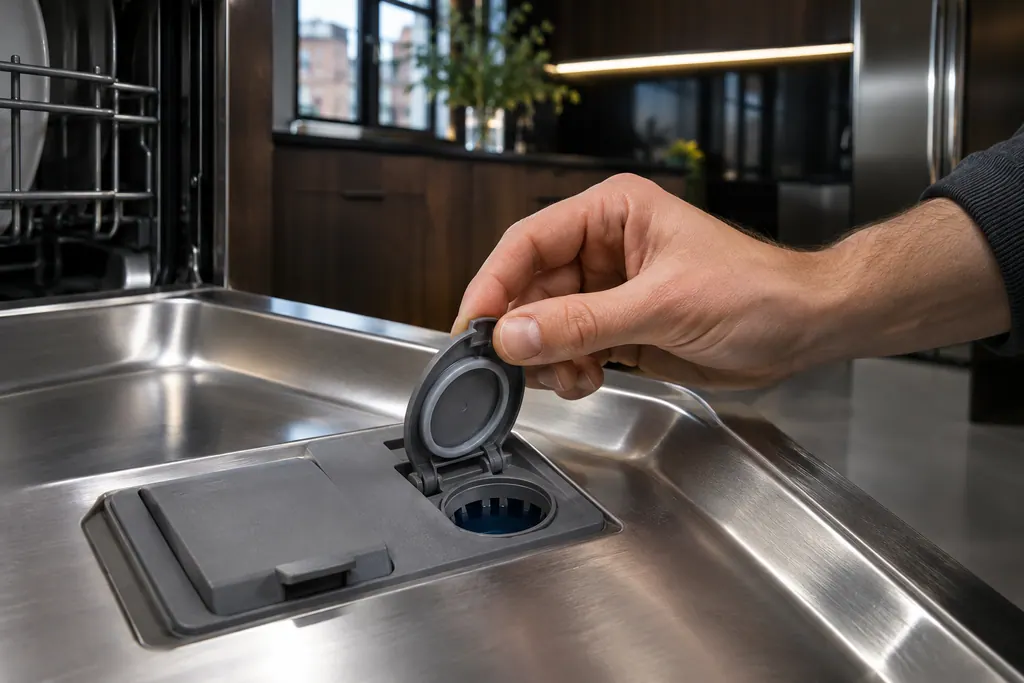
Several small habits lower the moisture that reaches the counter. JennAir's page lists a rinse aid, a drying option, a short wait before opening the door, kitchen ventilation and, in some installs, a moisture barrier. 1
- 1
- 2
- 3
- 4
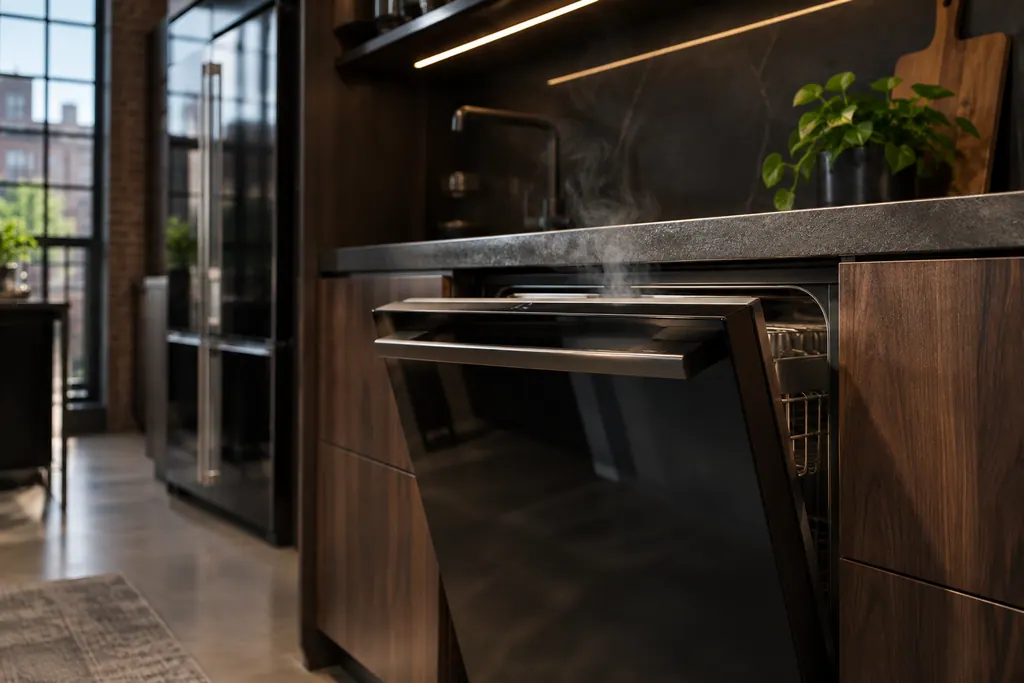
Some dishwashers have a function that opens the door a few inches at the end of the wash so hot air can leave and fresh air can circulate. JennAir calls it Door Open Dry or Natural Dry on certain models, and says you press the button on the console to enable it. 4 If your model has it, try it, and remember that the open door then releases steam into the room.
Could the install be sending steam to the counter?#
Yes. JennAir says gaps in the cabinet cutout, a worn door gasket or weak insulation can let warm, moist air reach the cool cabinet frame or counter. 1
The unit should be level, with a good door seal, the clearances in your installation instructions and the correct toe-kick and insulation. 1
If the dishwasher sits beneath a countertop overhang, JennAir suggests an approved moisture barrier to shield the underside of the counter. It names the accessory part number 4396277 and says it is available from your dealer. 1
Steam coming out of places other than the intended vent may point to a sealing or installation issue. 1 If you suspect that, note where it shows up and mention it when you book.
What if it really is a leak?#
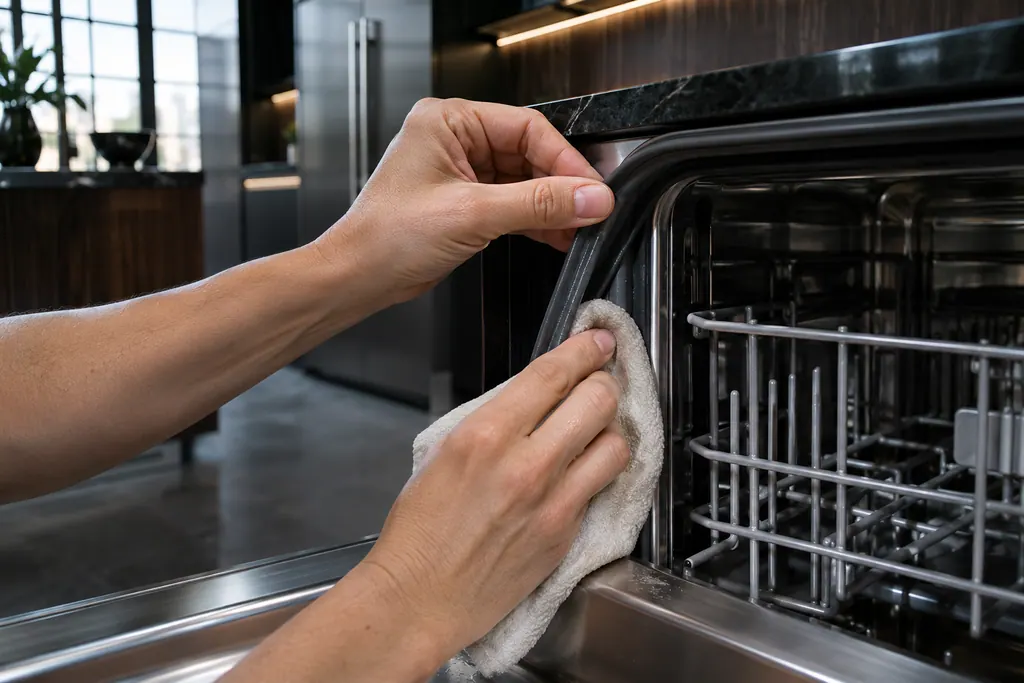
Check the door seal, the level and the connections. JennAir lists a damaged or dirty door gasket, a sticking inlet valve or float, worn pump or motor seals and loose or cracked supply and drain connections as the common causes. 2
Then use the location to narrow it down. At the door area it is often the gasket, suds or the level. At the bottom center it may be a pump seal or an overfill. Behind or under the cabinet it is more likely hose connections, the inlet valve or the drain line. 2
- Seal. Look for cracks, tears, flattened areas and food on the rubber, and make sure nothing blocks the door from closing. 2
- Level. The unit must be square in the cabinet and sit on its legs, flat on the floor, or the door will not seal. 3
- Loading. Do not let items poke out of the racks into the door seal. 3
- Suds. Dish soap makes foam, and detergent made for dishwashers does not. 35
If a leak is active, switch off power at the breaker and close the water supply. Put towels or a shallow tray at the door edge, and do not run the dishwasher until the source is found. 2
Which signs call for a repair visit?#
When the water is not just droplets, or when it returns after you have sorted the seal, level and connections. JennAir says to schedule service for a failing inlet valve, persistent overfill, a cracked tub or a worn pump or diverter seal. 2
You can see the dishwasher service page and the dishwasher leaking page. If the water stays inside the tub instead, read the new-install drain guide. The fill valve and float switch entries describe two parts that can cause an overfill.
Sources#
- Investigating Condensation on the Kitchen Counter - Product Help | JennAirJennAir Product Help (producthelp.jennair.com) · dateModified 2026-08-31; PH 847 · PH 847
- Dishwasher Leaking Troubleshooting Guide - Product Help | JennAirJennAir Product Help (producthelp.jennair.com) · dateModified 2026-08-31; PH 14224 · PH 14224
- Leaking from Door - Product Help | JennAirJennAir Product Help (producthelp.jennair.com) · dateModified 2026-06-17; PH 12393 · PH 12393
- Condensation on Interior - Dishwasher - Product Help | JennAirJennAir Product Help (producthelp.jennair.com) · dateModified 2026-06-17; PH 12095 · PH 12095
- Leaking - Underneath - Dishwasher - Product Help | JennAirJennAir Product Help (producthelp.jennair.com) · dateModified 2026-06-17; PH 12268 · PH 12268