On this page
- Remove the disposer knockout plug; a pencil in the inlet goes about 3 inches when it is gone. 2
- The drain loop should ideally be at least 20 inches from the floor; use an air gap if it cannot be. 3
- Kinked, pinched or sagging hoses let water flow back into the tub. 14
- F9E1 means Long Drain and lists the same checks. 5
- Turn the power off before you disconnect any hose.
Why will my newly installed JennAir dishwasher not drain?#
Most post-install drain problems come from the install, not the dishwasher. JennAir lists four usual causes: a disposer knockout plug that was not removed, a kinked or misrouted hose, a drain loop or air gap that is low or missing, and a blocked disposer. 1
A new dishwasher has never been cleaned out, and it has never had to pump against the sink plumbing in your house. Both the hose route and the sink connection are therefore the first things to look at. Cleaning the filter and checking the pump come after.
The order below goes from the cheapest check to the one that takes tools.
| Check | What it looks like | Source |
|---|---|---|
| Knockout plug still in the disposer inlet | Water sits in the tub and does not leave at all | 12 |
| Hose kinked, pinched or sagging | Water slowly returns or stays after the cycle | 14 |
| Loop too low or missing | Dirty sink water can siphon back | 23 |
| Air gap blocked | Water comes out of the air gap into the sink | 4 |
| Filter or sump blocked | A little water remains above the filter | 4 |
How do I check the disposer knockout plug?#
Built-in dishwashers usually drain through the garbage disposer, so the knockout plug in the disposer inlet has to come out. JennAir calls this sometimes-neglected step a common wrong diagnosis for a clogged or not-draining dishwasher. 1
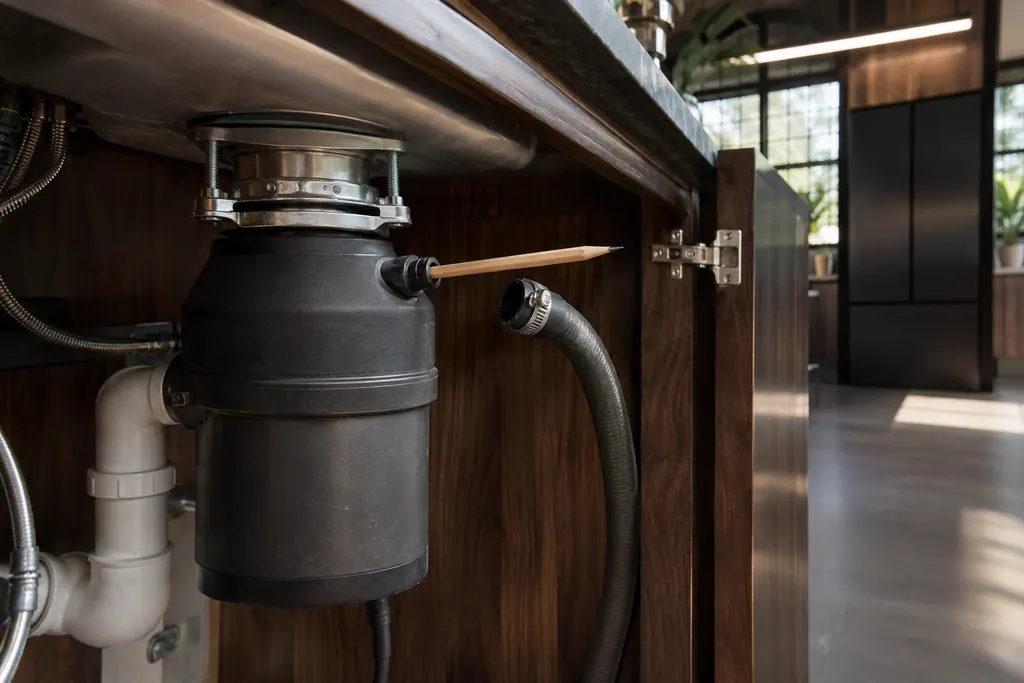
With the power off, disconnect the drain hose from the disposer and catch any water in a bucket or large bowl. Then look at the inlet. The plug is recessed, so you cannot see it from the side. Put a pencil into the inlet and feel for it. If the pencil goes in about 3 inches, the plug has been removed. 2
If it stops short, the plug is still in. JennAir's page Connecting Dishwasher Drain to Garbage Disposal covers removing it; if you are not comfortable doing it yourself, that is a job for the plumber or installer who set up the disposer, or for us. 12
After clearing the plug, check the disposer for food. A clogged disposer will stop the dishwasher from draining, and JennAir says to run the disposer to clear a blockage, then start a drain cycle on the dishwasher. 1
How high should the drain loop be?#
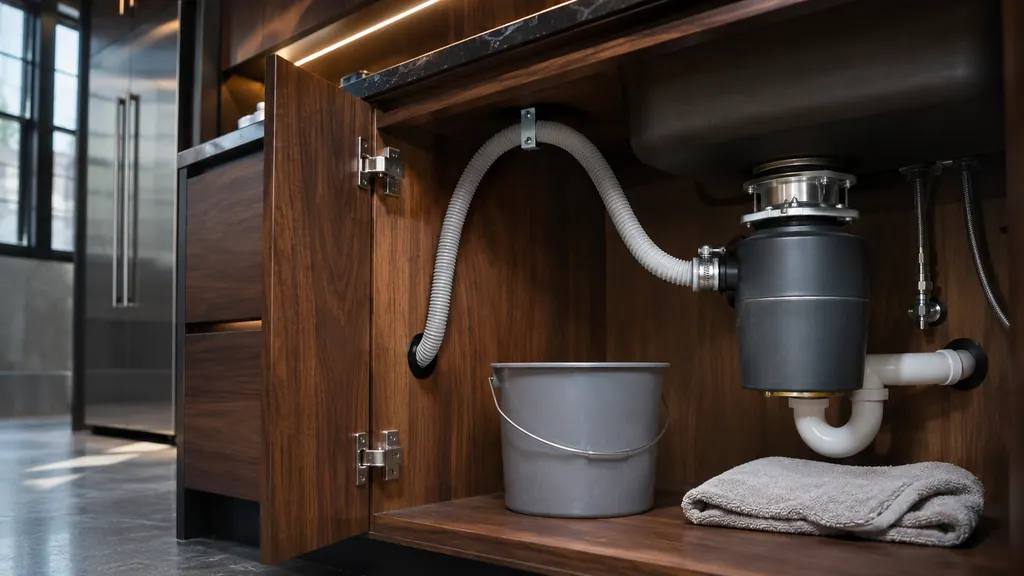
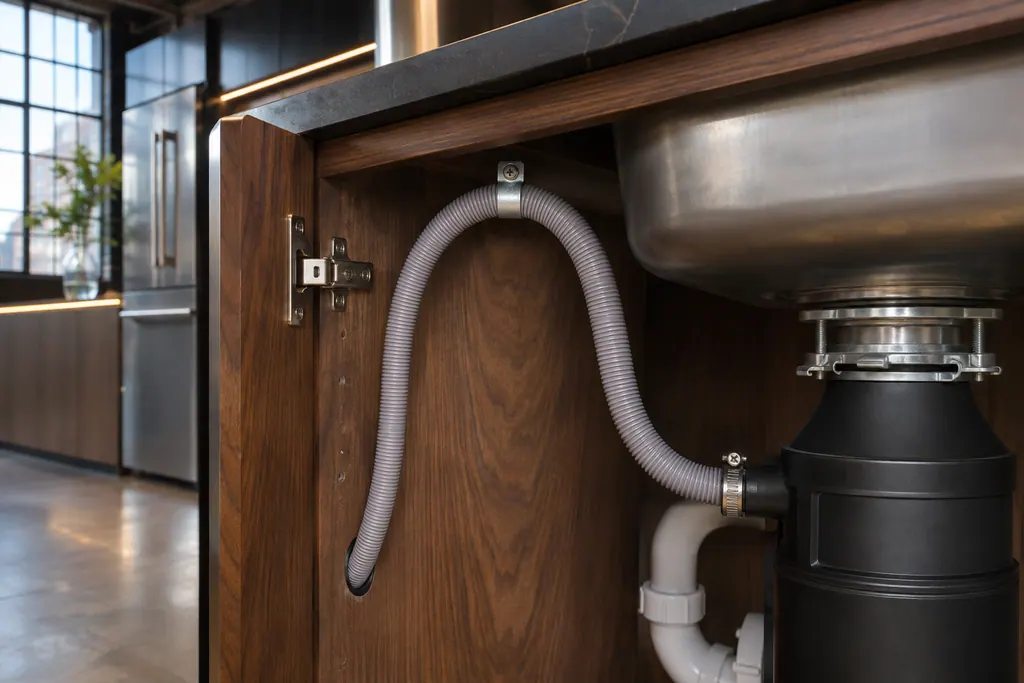
JennAir says to aim for at least 20 inches from the floor. That height forms the "high loop", and if it cannot be reached, the page says to use an air gap. A loop keeps dirty sink water from flowing back into the tub. 3
The loop is the hose raised to a high point, then secured near the top of the cabinet or the underside of the counter. JennAir explains that the hose should arch up before it reaches the disposer or drain pipe, and that a hose running flat or sloping down can be corrected by pulling the slack upward and fixing it with a bracket or zip tie. 23
- 1
- 2
- 3
- 4
What if my sink has an air gap?#
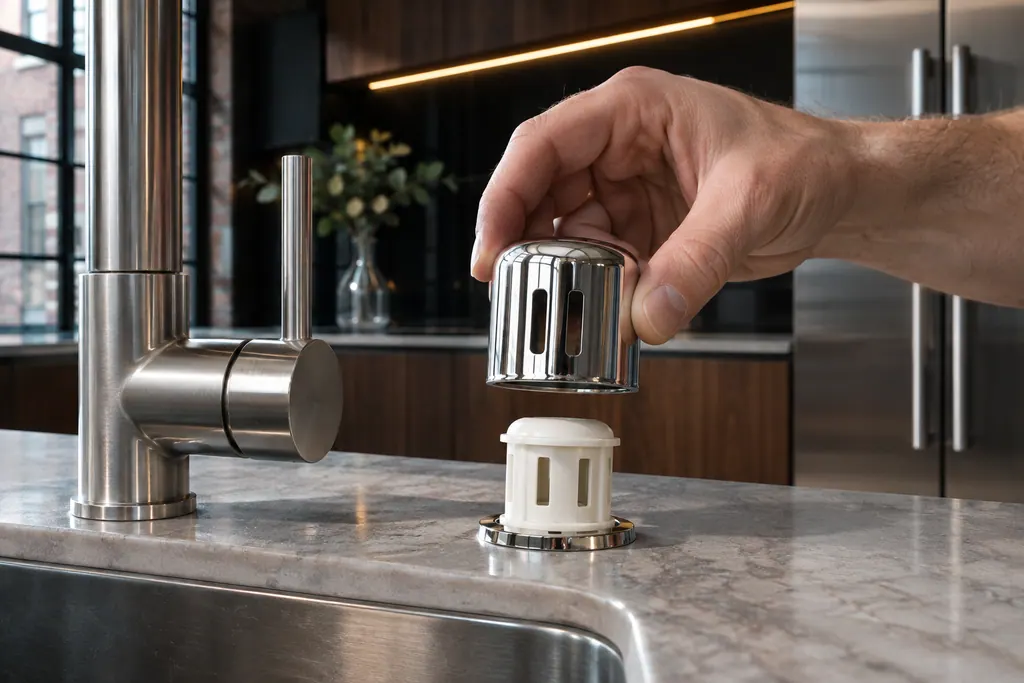
An air gap is a small fitting on the sink or counter that gives the drain water a break in the line. If yours is blocked, water can come back into the sink instead of going down the drain, and the dishwasher can be left with standing water. 4
JennAir says to confirm the air gap is clear and working, and to clean it inside and under its cap. Run a short cycle afterwards. If water spills out of the air gap into the sink, the blockage is downstream, in the hose-to-drain path or the sink plumbing. 4
What does F9E1 on my dishwasher mean?#
JennAir lists F9E1 as Long Drain, a potential cause of water not leaving the tub. Its fixes match this guide: clean the filter, check the hose, clear the disposer and the knockout plug, and clear the air gap. 5
See the F9E1 page for the full code write-up. The Clean light flashes nine times, pauses and flashes once to show it. 5 After the checks, JennAir advises a power cycle: unplug the dishwasher for 30 seconds, or turn its breaker off for 30 seconds and back on. 5
Foam can also cause it. Dishwasher detergent does not make suds, but dish soap does. If you find foam in the tub, stop the machine and let it settle, then use only detergent made for automatic dishwashers. 5
What do I do about the filter and standing water?#
Clean the filter, then deal with the water. JennAir says that many JennAir dishwashers have an upper fine filter and a lower coarse filter at the base of the tub. A blocked filter or sump debris is a frequent cause of slow drainage. 4
Remove as much standing water as you can first with a cup, a turkey baster or a hand pump, and put it in a sink or toilet. Do not pour drain-opening chemicals in the dishwasher. They can damage components. 4 Then take out the lower rack, twist the upper filter counterclockwise and lift it out, rinse the filters in warm water with a soft brush and look into the sump with a flashlight for labels, seeds, toothpicks or glass. 4
Seat the lower filter flat and lock the upper filter by turning it clockwise. Run a short rinse cycle and listen for the drain pump. If water remains, the next suspect is the pump or the controls, and that is a technician's job. 4 The drain motor and removable filter entries describe the parts.
What if the water still will not leave?#
When the install checks and the filter are fine and the dishwasher still holds water. Humming with no water movement points to a jammed impeller, grinding can mean hard debris such as glass is in the pump area, and silence during the drain phase can be an electrical or control problem. 4
You can read how we handle these on the dishwasher service page and the dishwasher not draining page.
Sources#
- Newly Installed Dishwasher Not Draining - Product Help | JennAirJennAir Product Help (producthelp.jennair.com) · dateModified 2026-08-31; PH 11997 · PH 11997
- Not Draining - Newly Installed - Dishwasher - Product Help | JennAirJennAir Product Help (producthelp.jennair.com) · dateModified 2026-06-10; PH 12151 · PH 12151
- Checking the Drain Loop Height - Product Help | JennAirJennAir Product Help (producthelp.jennair.com) · dateModified 2026-08-31; PH 837 · PH 837
- Dishwasher Not Draining - Product Help | JennAirJennAir Product Help (producthelp.jennair.com) · dateModified 2026-06-23; PH 14226 · PH 14226
- F9E1 - Dishwasher - Product Help | JennAirJennAir Product Help (producthelp.jennair.com) · dateModified 2026-06-15; PH 12203 · PH 12203