Start from the symptom
JennAir refrigerator frost and condensation.
JennAir calls a little moisture normal: small ice droplets on the freezer walls and back panel, and sweat on the center mullion or cabinet flanges in humid weather. Check doors, seals, vents and settings before assuming a defrost problem.
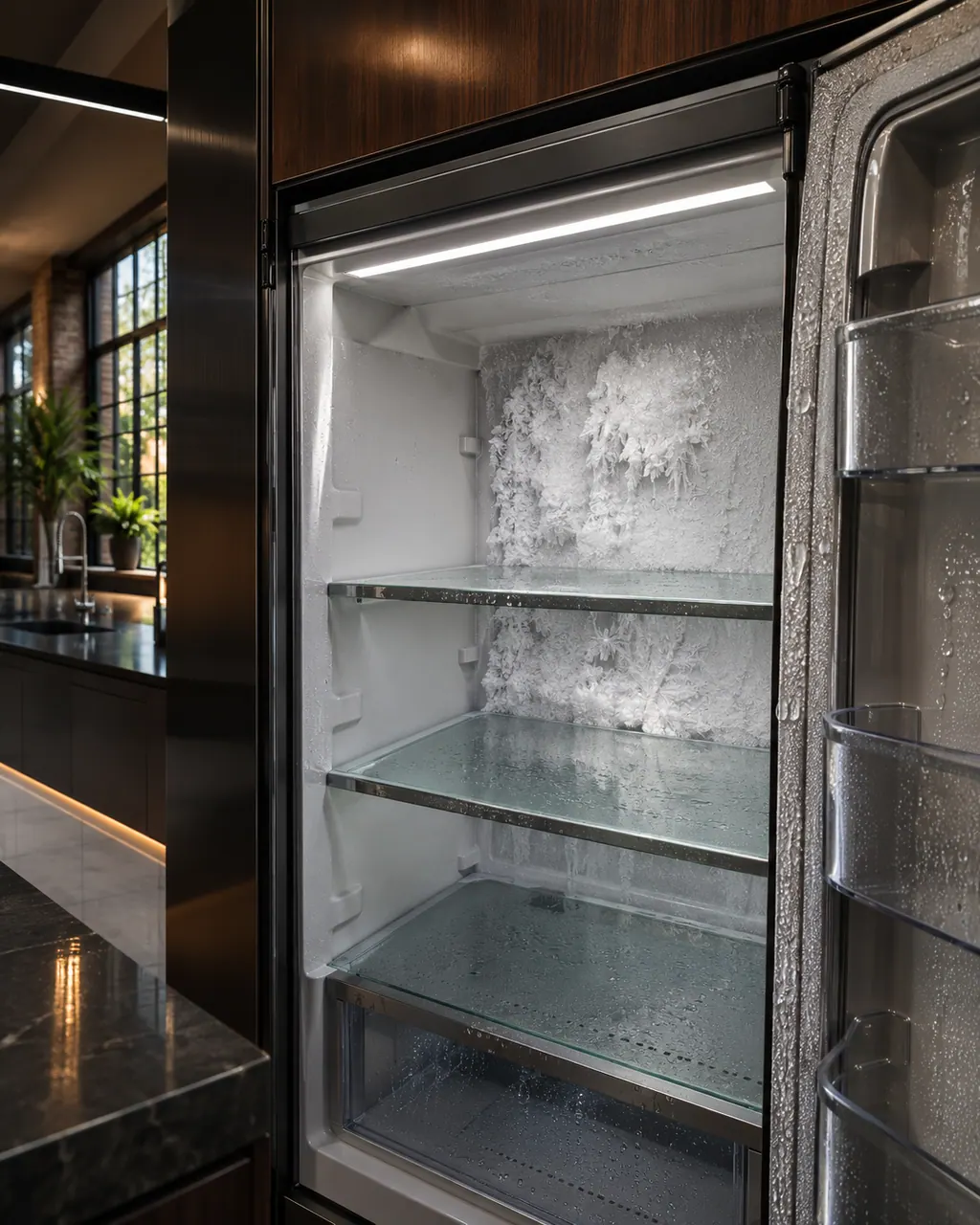
Start with safe observations.
Turn the appliance off and unplug it before any check you can do yourself. Look out for pooled water and sharp edges. Never touch a wet plug or live area, take off service panels, or go past your model’s owner instructions.
- 1
Know what is normal
A thin layer of frost, beads on shelves after a door opening, and moisture on the mullion or hinge seal in humid weather are expected.
- 2
Check that the doors close
A door left open, or a package between the gasket and cabinet, lets in humid air. A sheet of paper closed in the door should hold firmly.
- 3
Limit door openings
Take out what you need at once and close the door quickly.
- 4
Keep the vents clear
Air moves between freezer and refrigerator through vents. Blocking them can cause frost and uneven temperatures.
- 5
Review settings
JennAir suggests a refrigerator setting of 37 to 40 F and a freezer at 0 F, allowing 24 hours after a change. Check whether Energy Saver is on.
- 6
Wipe and level
Wipe moisture from the mullion and flanges. Make sure the refrigerator is level and the doors are aligned.
Systems a technician may investigate.
We name no part before the visit. After the diagnostic the technician tells you which part, if any, has failed, and matches it to your model and serial number before anything is replaced.
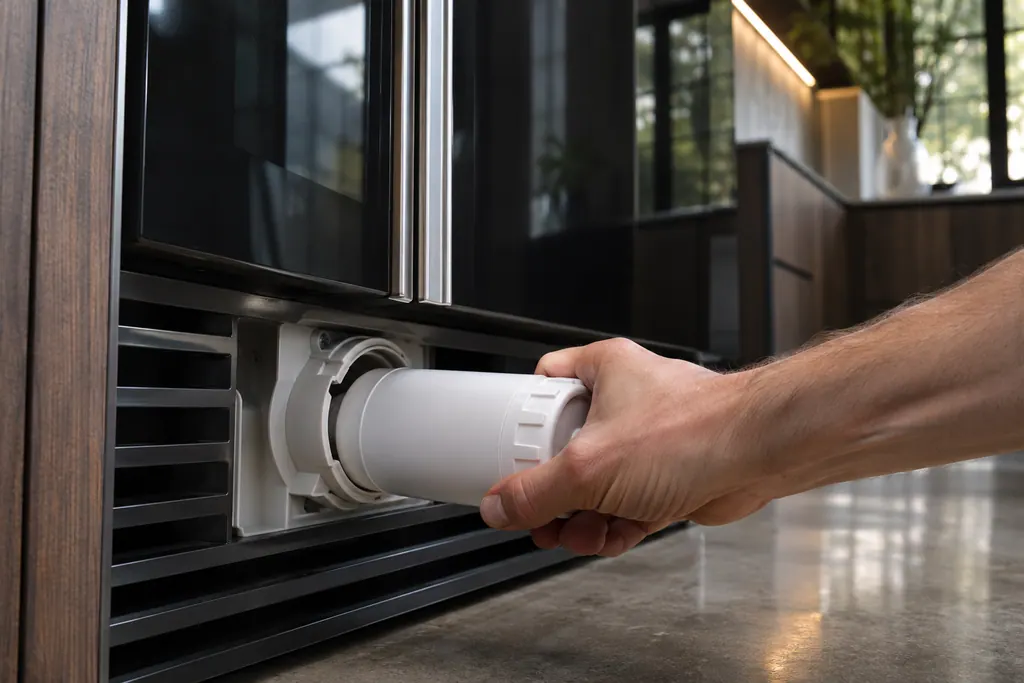
Refrigerator water filter
JennAir recommends replacing the refrigerator water filter every 6 months, when the indicator light comes on, or as needed. A clogged or badly seated filter can slow water flow, thin the ice or stop ice. After changing it, you must reset the status light on most models.
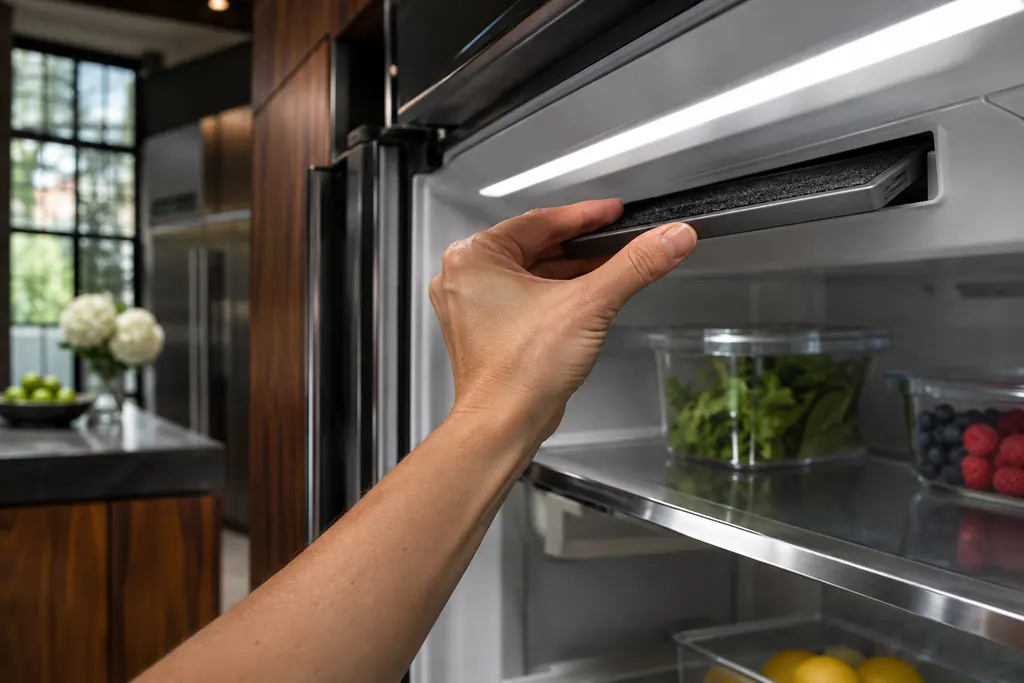
Refrigerator air filter
Some JennAir refrigerators have a Freshflow air filter that reduces food odors. A colored icon shows its status: blue is good, yellow means order a replacement, red means replace it, and flashing red means expired. After a change, hold AIR FILTER for 3 seconds to reset.
If the display adds a code.
No code tied directly to this topic.
No further researched dishwasher code is attached to this topic. Compare your exact message with your model manual and do not stand in a different code from the library.
See the research statusRead the related care guide.
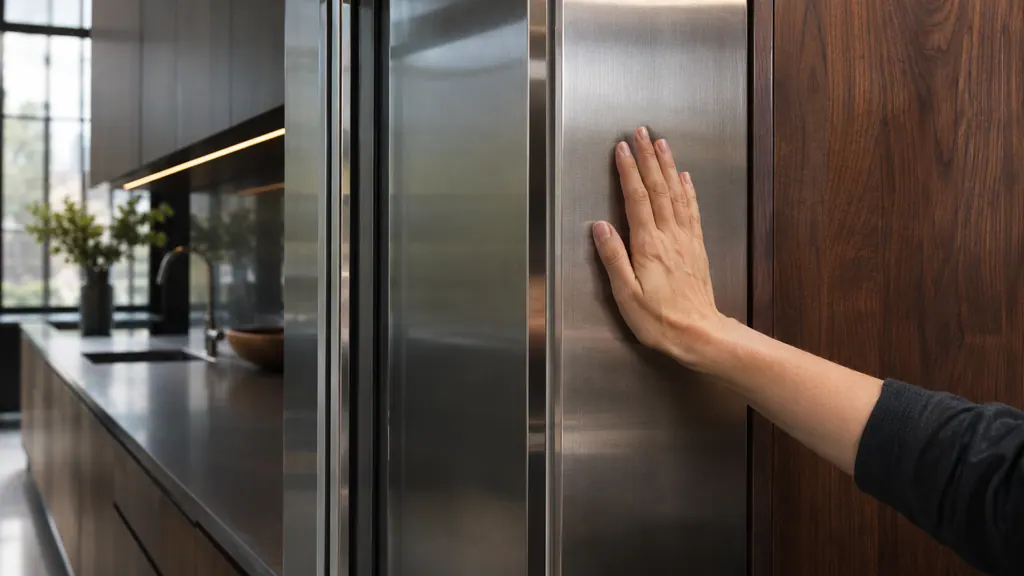
Warm outside your fridge? Often normal.
A warm cabinet on a JennAir refrigerator is usually normal: the unit moves heat from the food compartments into the room through condenser loops in the walls and front frame. Heavy use, a hot kitchen, a fresh install or warm groceries make it stronger. Check the condenser if it stays hot. [1]
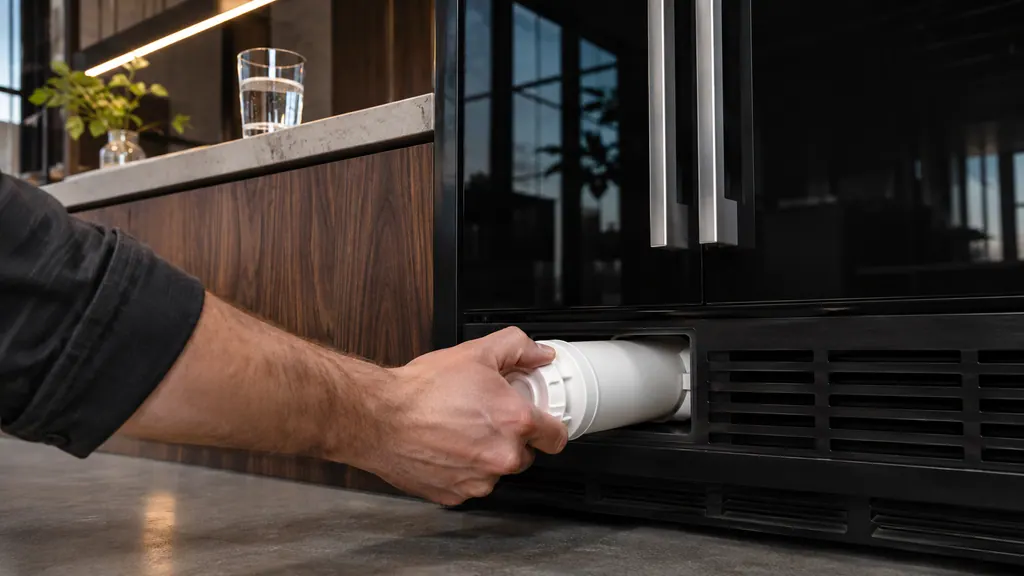
Slow water or thin ice? Check the filter.
A JennAir refrigerator water filter should be changed about every 6 months, when the indicator light comes on, or sooner if the flow drops. Thin or hollow ice, odd-tasting water and a slow dispenser are signs. Use a genuine everydrop filter, and flush the system after you change it. [1][3][4]
When observation becomes a service request.
Leave internal testing to a technician.
Frost builds thick on freezer walls, the seal looks damaged, or ice keeps forming after the checks. Book a visit.
Arrange a diagnosticSources and model boundaries.
The JennAir refrigerator frost and condensation guidance rests on these references. Pick the manual that fits your model.
- Frosting or Condensation - Product Help | JennAir
- How to Help Eliminate Condensation and Frost - Product Help | JennAir
- What's Normal Condensation or Frost - Product Help | JennAir
- New Refrigerator are Different - Product Help | JennAir
- What to Check if the Refrigerator Section is Too Cold - Product Help | JennAir
- Moisture on the Outside of the Cabinent - Bottom Freezer Refrigerator - Product Help | JennAir
Go by the instructions for your own model. See how we research these pages.
Is some frost in the freezer normal?
Yes. JennAir calls small ice droplets on the freezer walls and back panel normal, with more frost possible in humid months.
Why is the outside of my refrigerator wet?
Humid room air can condense on the outside. Some models have a seal heater with its own control to prevent this.
What temperatures does JennAir suggest?
Refrigerator at 37 to 40 F, freezer at 0 F, with 24 hours to settle after any change.
Will blocked vents cause frost?
They can. Cool air passes between the compartments through vents, and JennAir says to keep them clear.
Code or symptom, part, service call
Tie the message to what comes next.
JennAir refrigerator light not working
On a JennAir the interior lights turn themselves off after the door has been open 10 minutes. Close every door for 1 minute to reset. Then check the door switch, the wiring plug after a delivery, Sabbath mode and the bulb.
Refrigerator repair
Schedule a diagnostic for your model, carried out at the appliance.
Find your metro
Office details, plus the access notes to pass along.