On this page
- Read the rinse aid gauge with the door fully open. 1
- Factory setting is 2 or 3; use the highest for drying issues. 1
- All-in-one packs dissolve in the main wash, so they may not help drying. 2
- Use only dishwasher salt, and not table or de-icing salt. 4
- Etching is permanent, and a lower rinse aid level helps avoid it. 6
What is rinse aid for in a JennAir dishwasher?#
It helps water slide off dishes in the final rinse. JennAir says rinse aid lowers the surface tension of water, so the water sheets off instead of beading, which reduces spots and speeds drying. A tiny dose is released automatically, about 3 milliliters, on every cycle. 12
JennAir adds that today's dishwashers use less energy than older ones, so drying often needs the help. An old dishwasher that dried without rinse aid does not mean a newer one will. 2
Rinse aid also helps with moisture on the tub walls and door, and it limits mineral deposits on glass and stainless steel. 2
If you use all-in-one detergent packs, the pack may contain rinse aid, but it dissolves in the main wash, before the final rinse. JennAir says that means it may not help much with drying. Rinse aid in the dispenser works in the final rinse itself. 2
How do I check the rinse aid level?#
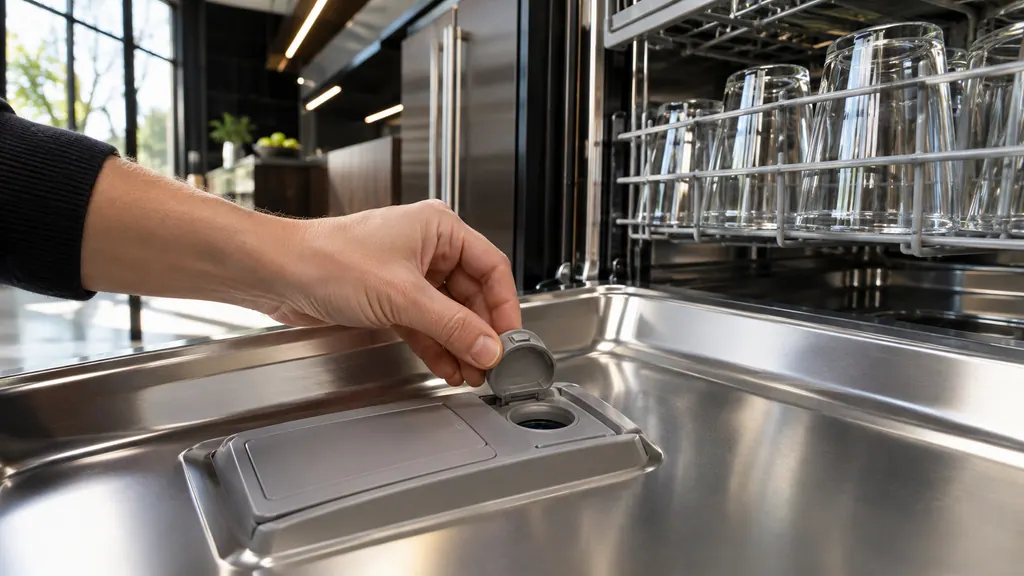
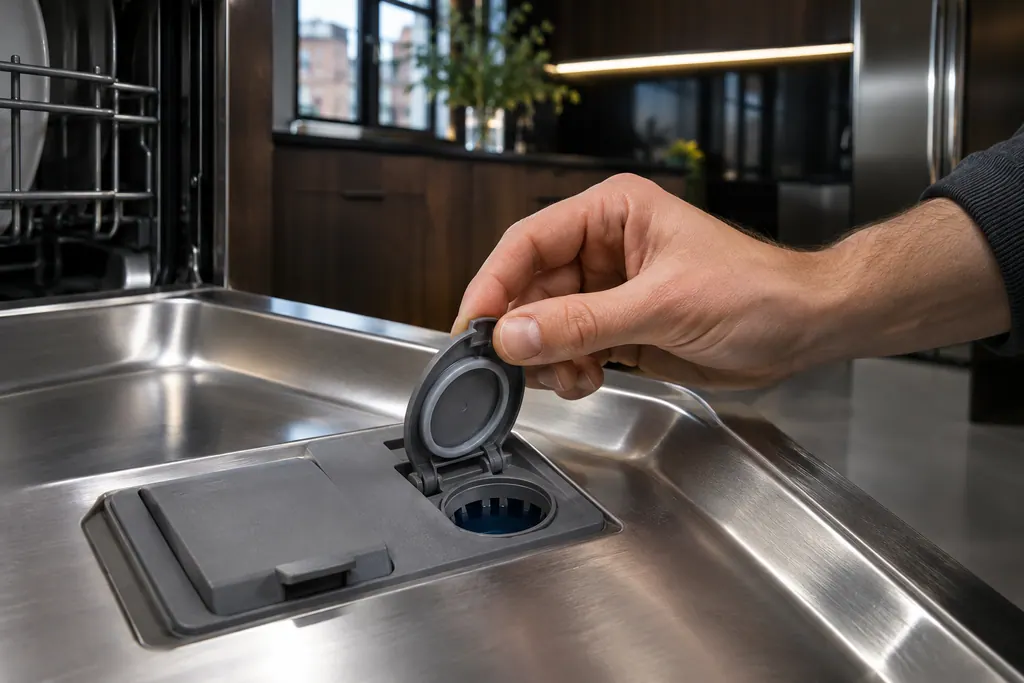
Open the dispenser on the inner door panel, near the detergent compartment, and read the gauge with the door fully open. JennAir says the gauge only registers correctly in that position. A door tilted at an angle gives an inaccurate reading. 1
Most dispensers have a clear section or a fill indicator. Fill to the maximum line, and no higher. Many JennAir models also have a rinse aid indicator light that comes on when it is low. 1
- 1
- 2
- 3
- 4
What setting should I use?#
Start at the factory setting and move a single step per test. JennAir says the dose is adjustable, the factory setting is 2 or 3, and if you have drying problems you adjust to the highest setting. Hard water and white rings or calcium spots are also reasons to raise it. 1
Your owner's manual has the exact button sequence for your model, since controls differ. 1 For a drying complaint, JennAir's quick-fix page says to raise the setting one level and retest, and to confirm the dispenser is full. 7
| What you see | What it suggests | What to try | Source |
|---|---|---|---|
| Dishes wet after the cycle | Rinse aid low or dose too small | Refill, raise one level | 17 |
| White rings or calcium spots | Hard water | Raise the dose, check the softener | 15 |
| Cloudy film that wipes off with vinegar | Film from hard water or too much detergent | Clean, use quality packs, keep rinse aid | 56 |
| Dull, rough glass that vinegar does not clear | Etching | Lower the rinse aid level | 6 |
How do I tell film from etching?#
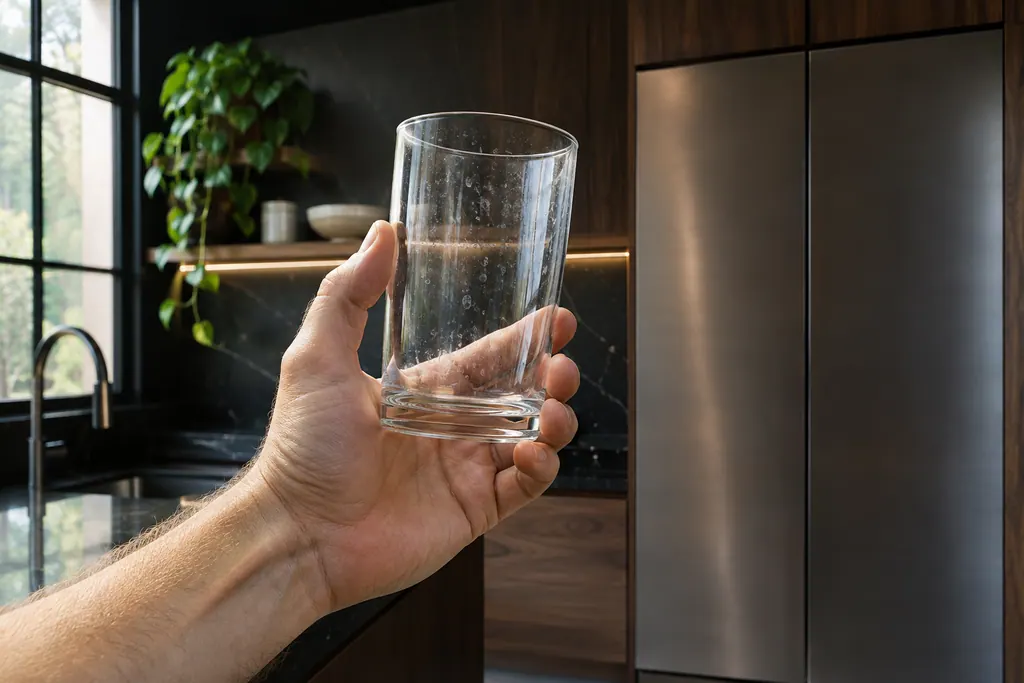
Try to rub it off with a little vinegar. JennAir says film looks cloudy or hazy and comes from hard water deposits or detergent residue. Etching leaves permanent dullness or roughness, and it will not rub off. 6
The causes differ, and so does the fix. For film, the causes are hard water, too much detergent and poor loading, and the fixes are testing your water hardness, using quality pre-measured detergent and making sure the spray arms and dispenser are not blocked. For etching, the causes are water that is too soft, too much detergent, poor glazing on dishware and long hot cycles. The suggested fixes include testing hardness and lowering the rinse aid level. 6
That last point matters. A higher dose is the usual answer to hard-water spots, while for etching JennAir points the other way, to a lower level. Look at the glass first.
What does the built-in softener need?#
On models with a salt reservoir, dishwasher salt. Hard water leaves mineral deposits, and the softener reduces the calcium and magnesium behind them. JennAir notes that not all dishwashers have a salt reservoir, so check yours. 4
JennAir says the operating range for the dishwasher is water hardness under 15 grains per gallon, and that 15 grains or more can damage the dishwasher and spoil results. A water softener is recommended above that. 56
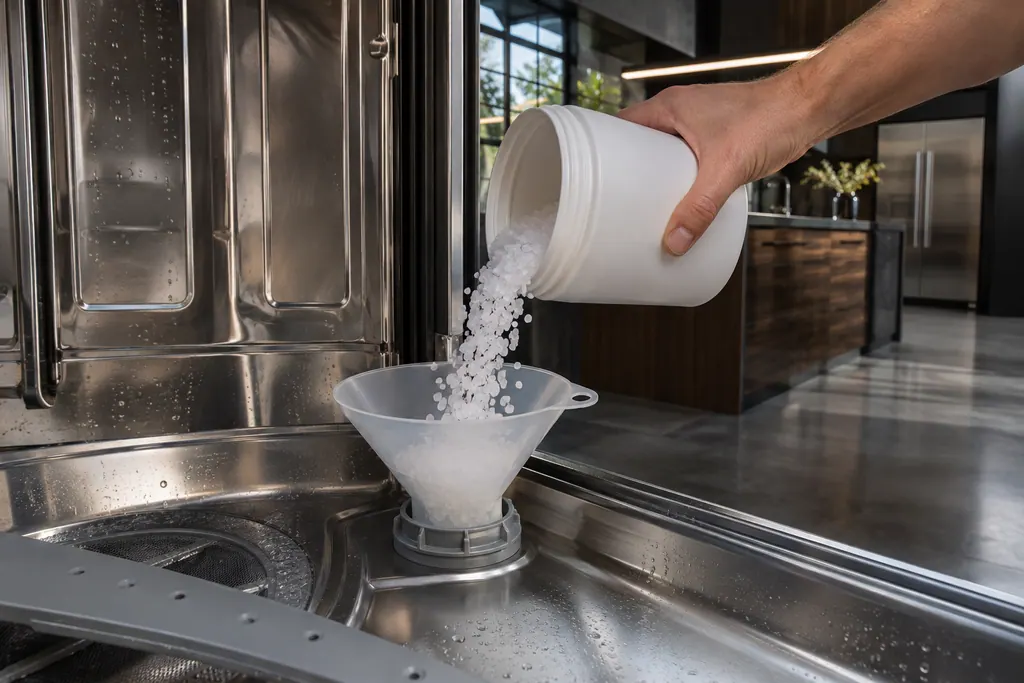
The salt container holds about 4½ cups (1.0 kg). Before adding salt the very first time, fill the container with water to the top of the opening, about one quart, then use the funnel and fill slowly with salt. Wipe excess salt from the threads and screw the lid on firmly. 4
- Use only salt made for dishwasher softeners. 4
- Do not use table, sea, rock or de-icing salts. 4
- Keep detergent out of the salt container. 4
- Run a quick rinse cycle after refilling to dissolve spilled salt. 4
When do I refill the salt?#
When the lid center turns from green to clear, or when an Add Salt message appears after the wash cycle. JennAir says a typical refill is about every 6 to 8 weeks at the factory hardness setting of 3, but use and cycle choices change that. 4
You can keep washing without salt. In hard water you may see spotting, filming or weaker cleaning, so refill as soon as you can. 4
What else helps drying?#
Heat, loading and hot water. JennAir's quick-fix page lists a heated dry or extended dry option, the hot water at the tap running before you start (about 120°F is ideal at the tap), loading that lets water drain, and plastics on the top rack. 37
Plastics are hard to dry because their surface is porous, and they hold droplets, so they may need to air dry. 3 If the tub does not feel warm after a heated dry cycle, the dishwasher may not be heating. 7
Our dishwasher not drying page goes through those cases, and the heating system entry shows the part involved.
When does the dispenser need a repair visit?#
When the dispenser will not release rinse aid, an indicator stays on after refilling, or dishes stay wet even with the dose up and a heated dry selected.
See the dishwasher service page for what we repair.
Sources#
- How to Determine Rinse Aid Level - Product Help | JennAirJennAir Product Help (producthelp.jennair.com) · dateModified 2026-08-31; PH 842 · PH 842
- Frequently Asked Questions About Using Rinse Aid - Product Help | JennAirJennAir Product Help (producthelp.jennair.com) · dateModified 2026-08-31; PH 843 · PH 843
- Getting the Best Drying Performance - Product Help | JennAirJennAir Product Help (producthelp.jennair.com) · dateModified 2026-08-31; PH 844 · PH 844
- Filling the Dishwasher Water Softener - Product Help | JennAirJennAir Product Help (producthelp.jennair.com) · dateModified 2026-08-31; PH 8213 · PH 8213
- Spotting or Filming on Glassware - Product Help | JennAirJennAir Product Help (producthelp.jennair.com) · dateModified 2026-06-17; PH 12115 · PH 12115
- Etching or Cloudy Glassware - Product Help | JennAirJennAir Product Help (producthelp.jennair.com) · dateModified 2026-06-17; PH 12110 · PH 12110
- Dishes Not Drying: Quick Fix Guide - Product Help | JennAirJennAir Product Help (producthelp.jennair.com) · dateModified 2026-08-31; PH 14225 · PH 14225