On this page
- Dark, dull pans brown more; shiny pans brown less and may need extra time. 1
- Food loaded before the preheat tone gets too much top heat. 12
- Leave about 2 inches around each pan so hot air can circulate. 2
- On convection the display may show a lower number than you set, and that is normal. 3
- Calibration is the last thing to suspect, after the simple checks. 1
Why is my JennAir oven browning unevenly?#
Most of the time the oven is doing its job and something around it is off: the pan, the preheat, the rack height or the room for air. JennAir's help pages list those causes first, and each one is a check you can finish in a single bake. 12
Start with the three that change results the most.
- Preheat. Food that goes in early gets too much heat from above and can brown on top while the bottom stays under-cooked. 1
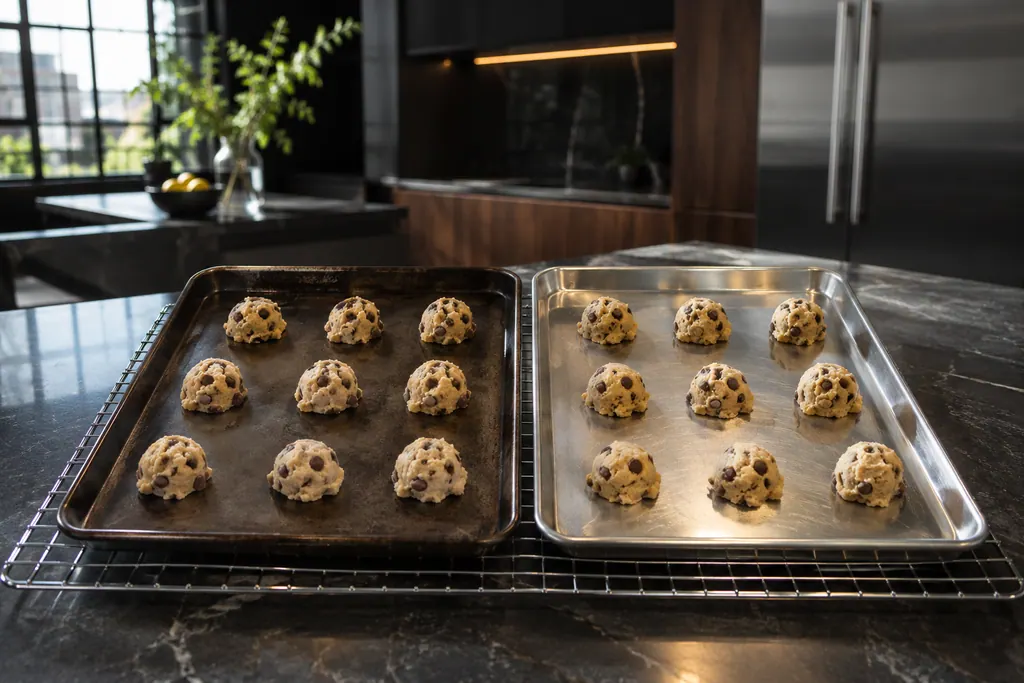
- Bakeware. Dark, dull pans absorb heat and brown darker. Shiny pans reflect heat and brown lighter. 1
- Rack position. A lower rack helps when the bottom of the food is pale or raw. 1
A JennAir range or wall oven is built for precise cooking, so the oven rarely needs replacing parts to fix a lopsided tray. Treat the first bake after each change as a test, and change only one thing at a time so you know what worked.
Should I hold off until the preheat tone?#
JennAir says preheating is necessary for good results, and that you should place food in the oven as soon after the signal as you can. Food loaded early gets too much top heat and over-browns. 12
Preheat time is also less than people expect to wait for. JennAir describes 12 to 15 minutes (plus or minus 5) to reach 350°F as normal for an oven with all racks in. 2 If yours takes about that long, it is not slow. The long pre-heat times guide covers the cases that run longer.
Once the tone sounds, avoid leaving the door open. An open door drops the temperature you just spent minutes building. 2
Which pans brown more and which brown less?#
Dark, dull pans brown more and shiny pans brown less. JennAir also says shiny and insulated pans may need extra time, or a spot closer to the bake element. Use the recipe's pan size, and follow the bakeware maker's advice. 12
The table turns that into a quick decision aid. It restates what the help pages say, nothing more.
| What you see | What the help page points to | What to try |
|---|---|---|
| Bottoms darker than you like | Dark, dull pan absorbing heat 1 | Switch to a lighter, shiny pan |
| Bottoms pale or raw | Shiny or insulated pan, or a high rack 1 | Move to a lower rack, add time |
| Top dark, bottom raw | Food loaded before the oven finished preheating 1 | Wait for the tone |
| Pie crust edge too dark | Edge exposed to direct heat 1 | Cover the crust edge with foil |
Foil has one more use that JennAir mentions: aluminum foil over a pie crust edge slows its browning while the filling finishes. 1
How do rack height and airflow change the result?#
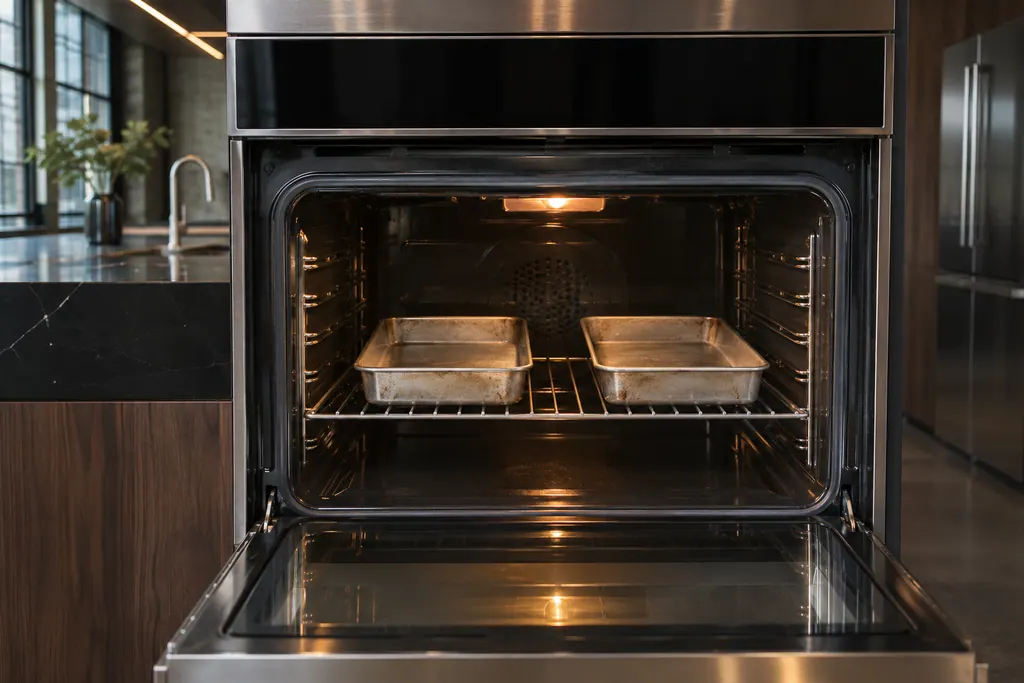
Hot air has to move around the food. JennAir says to leave about 2 inches between a pan and the oven walls, and to keep pans from touching when you bake more than one at a time. Touching pans can create hot spots and faster cooking where they meet. 2
For rack height, JennAir gives this guide for most baked goods, using a single rack when you can: 2
- Top rack: toasting or baking.
- Center rack: most baked goods, cookies, layer cakes and casseroles.
- Bottom rack: roasting meats.
- Several racks: spread them as evenly as you can, so air still circulates.
If the bottoms of your bakes are not browning or cooking, JennAir suggests trying a lower rack. 1
Why does my convection oven show a different temperature than I set?#
Because convection conversion changes the numbers on purpose. JennAir says the time and temperature on the display may differ from what you entered, and that it is normal. The feature converts a standard recipe into an ideal time and temperature for convection. 3
JennAir's own example: set 350°, and after preheating the display reads 325°. 3 Check your owner's manual to find out whether your model has the conversion feature and how it works. 3
The fan is why convection can cook faster or at a lower temperature. It moves hot air, which spreads heat more evenly than still air, helps surfaces crisp and yields crustier breads. Most foods can cook at a lower temperature or for less time on convection, and some ovens adjust standard recipe settings automatically. 3
That means two things for uneven results:
- Do not "fix" the displayed number by raising it. It was lowered by design.
- If you also adjust the recipe yourself, you may be reducing it twice. Check whether your model already converts for you.
Does foil or a liner change how my oven bakes?#
Yes, if it covers a whole rack or the oven bottom. JennAir says not to cover an entire rack, or the oven bottom beneath the pan, with aluminum foil, because that blocks the airflow the oven depends on. Foil as a drip catcher is fine if it is sized right. 45
The longer advice from the Odors and Smoke page is specific. To catch spills, put foil on the rack below the dish, make it at least half an inch larger than the dish and turn the edges up. Do not line the oven bottom with foil or a liner at all, because that can permanently damage the oven bottom finish. 5
Uneven results often show up after someone has lined the oven "just for neatness". If you have a liner in place, take it out and bake once without it before you try anything else. The same goes for a sheet pan that covers most of the rack: the air cannot go around it, so one side of the oven gets less heat than the other.
What simple tests tell me where the problem is?#
Run a short series of bakes, changing one thing each time. The checks below come straight from the help pages, in the order that rules out the easy causes first. 12
- 1
- 2
- 3
- 4
- 5
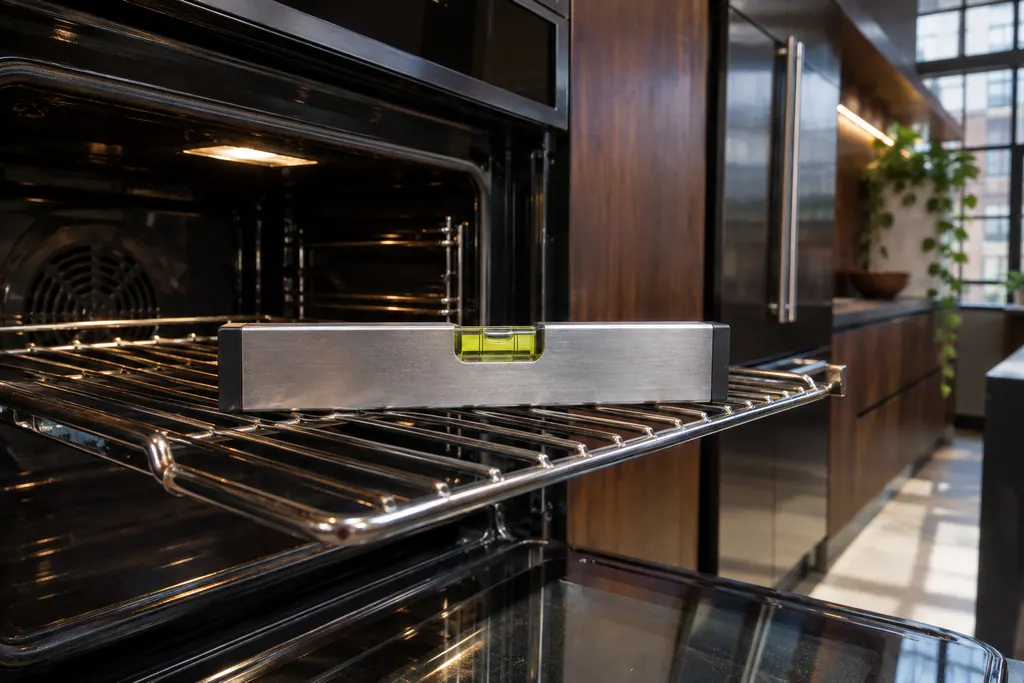
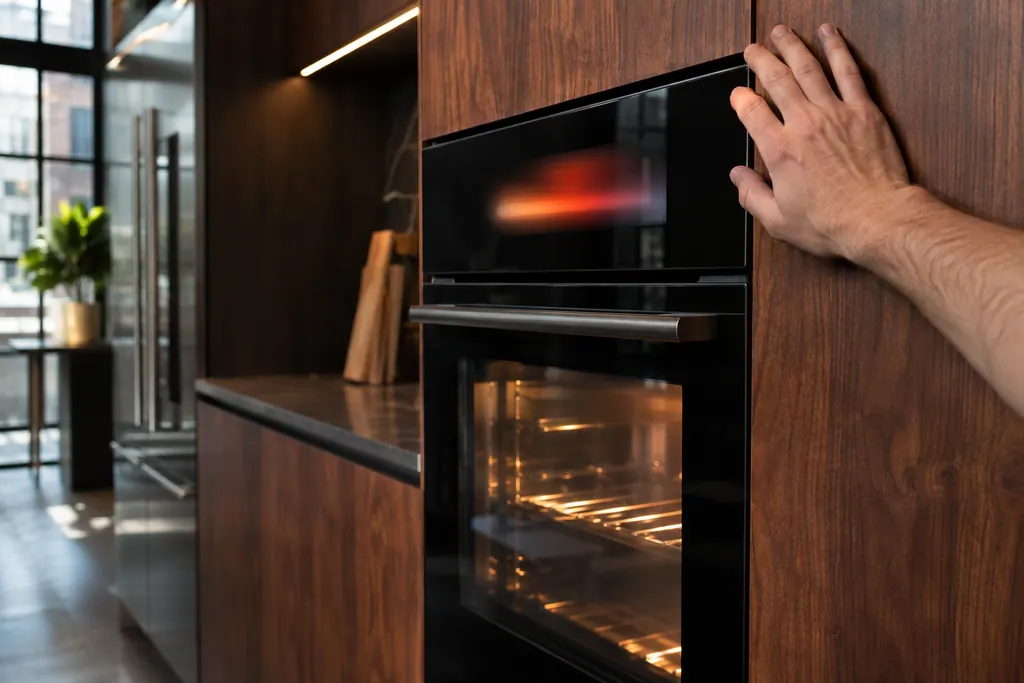
Keep a note for each bake: pan, rack, whether you waited for the tone, and where the food browned. After three or four bakes the pattern is usually obvious. If it is still the same side every time with every pan, the cause is probably the oven, not the pan.
When does uneven baking mean the oven needs service?#
When the simple checks do not change the result. JennAir lists temperature calibration as one more thing to evaluate after pans, preheat and rack position. A technician can measure the oven's real temperature and check the sensor and the bake element. 1
You can read what we handle on the oven service page and see the oven temperature problems page. Parts that decide how an oven heats are the temperature sensor and the bake and broil element.
Sources#
- How to Correct Uneven Baking or Browning - Product Help | JennAirJennAir Product Help (producthelp.jennair.com) · dateModified 2025-10-16; PH 685 · PH 685
- Possible Causes for Poor Baking Results - Product Help | JennAirJennAir Product Help (producthelp.jennair.com) · dateModified 2025-10-16; PH 696 · PH 696
- How to Tell if Convection Conversion Temperature is Correct - Product Help | JennAirJennAir Product Help (producthelp.jennair.com) · dateModified 2025-10-16; PH 689 · PH 689
- Long Preheat Times - Range - Product Help | JennAirJennAir Product Help (producthelp.jennair.com) · dateModified 2025-03-06; PH 12693 · PH 12693
- Odors and Smoke in Oven - Product Help | JennAirJennAir Product Help (producthelp.jennair.com) · dateModified 2025-10-16; PH 697 · PH 697